
Last Updated: November 4, 2026
Quick Summary
A prayer space is a designated area at home set aside for prayer, reflection, and quiet time with God, and it works best when built around a routine rather than a room. Pick a consistent time first, then choose a corner, closet, or alcove and keep it stocked with four essentials: seating, a small surface, light, and one or two focal items.
- Start with a consistent prayer time, even ten minutes, before furnishing any corner.
- A prayer corner needs only seating, a small surface, light, and one or two focal items.
- Renters can use a folding screen, tension-rod curtain, or bookshelf as a visual boundary.
- Keep the phone in another room or face down to limit the biggest distraction.
- Anchor the habit to an existing routine like morning coffee or bedtime.
Table of Contents
- Tips for Creating a Prayer Space That You Will Actually Use
- Start With the Time, Not the Room
- Choosing a Spot: Dedicated Room, Corner, or Closet
- What Should a Prayer Corner Have? The Essentials
- Simple Prayer Room Design: Decor, Lighting, and Atmosphere
- Prayer Room Ideas for Small Spaces, Renters, and Shared Bedrooms
- Keeping the Space Clean, Orderly, and Free of Distractions
- Building a Prayer Habit That Sticks
- Shop Faith-Filled Pieces for Your Prayer Space
- Frequently Asked Questions
Tips for Creating a Prayer Space That You Will Actually Use
A prayer space is a designated area at home set aside for prayer, reflection, and quiet time with God, and it works best when it is built around a routine rather than a room.
Below, we will show you exactly how to build one, from choosing the spot to keeping it usable for years.
Here is the part most guides get wrong: they start with decor. A beautiful prayer corner you never visit is just furniture. Start with the habit, and the room follows.
Start With the Time, Not the Room
The single biggest mistake is furnishing a corner before deciding when you will use it.
Ask yourself three questions:
- What time of day am I most alert and least interrupted?
- How long can I realistically commit on a normal weekday?
- What tends to pull me away at that hour?
Some people find that early morning works because the house is quiet. Others prefer the evening, when work is finished. Neither is better.
Once you have a time, you know what the space needs: good light at that hour, a comfortable place to sit, and whatever helps you focus.
Choosing a Spot: Dedicated Room, Corner, or Closet
You do not need a dedicated room to have a real prayer space. A corner, a closet, or one end of a bedroom can serve the same purpose when it is set apart and used consistently.
Here is how the options compare:
| Option | Best for | Trade-off |
|---|---|---|
| Dedicated room | Households with spare square footage | Requires the most space and upkeep |
| Corner of a room | Most homes and apartments | Needs a visual boundary to feel set apart |
| Closet or alcove | Renters and shared bedrooms | Limited seating and light |
| Shared living space | Small homes and group prayer | Requires a household schedule |
A dedicated room is a gift if you have one, but it is not required. A corner with a chair, a small table, and a clear boundary does the same work.
How to Pick a Quiet Place in a Busy Home
Walk through your home at the time you plan to pray and listen. The spot near the kitchen will not work at dinnertime, and the spot by the front door will not work when packages arrive. Choose the location that is quietest at your chosen hour, not the one that looks best in the afternoon.
A few practical checks:
- Sit in the spot for five minutes and notice what you hear and see.
- Avoid facing a television, a work desk, or a doorway people pass through.
- If possible, sit with your back to the room so passing activity stays out of view.
What Should a Prayer Corner Have? The Essentials
A prayer corner needs four things: a comfortable place to sit, a surface within reach, a source of light, and a small number of items that direct your attention. Everything else is optional. Keep the list short and the space stays usable.
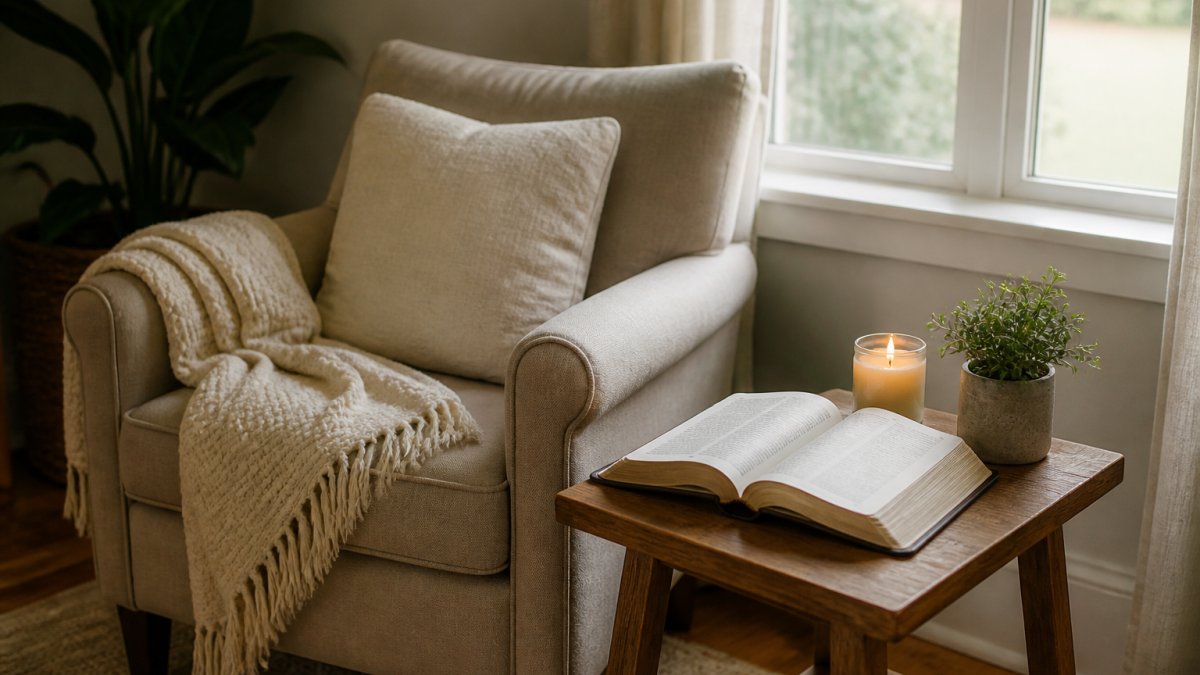
The essentials, in order of importance:
- Seating. A chair with back support, a floor cushion, or a bench. Comfort matters more than style, especially if you plan to kneel or sit for a while.
- A small surface. A side table or shelf for an open Bible, a journal, and a mug.
- Light. A lamp or a window. Soft, warm light supports reflection better than overhead lighting.
A common mistake is filling the corner with everything meaningful at once. Start with the four essentials, live with the space for a few weeks, and add only what you actually reach for.
If you want a comfort item to round out the corner, our guide to the best prayer blankets for comfort covers options that work well in a small devotional setup.
Religious Items Worth Including
Choose items that match your own tradition and practice rather than copying someone else's setup. A Bible or prayer book, a journal, a cross or icon, and a candle cover most needs.
If you follow a tradition with set prayers, a small card with the words you use is more helpful than a shelf of books you will not open.
Simple Prayer Room Design: Decor, Lighting, and Atmosphere
Simple prayer room design comes down to three levers: light, color, and sound. Get those right and the space feels set apart without a single new purchase. Get them wrong and even a well-furnished room feels like a hallway.
Lighting. Layer a warm lamp with natural light where you can.
Color and texture. Soft neutrals, wood tones, and one accent color keep the space calm.
Sound. Silence is ideal, but not always available.
Scent. A candle or a diffuser can signal to your brain that prayer time has begun.
The goal is an atmosphere that supports reflection, not one that impresses a visitor.
The Blessing Floral Scripture Hoodie →
Prayer Room Ideas for Small Spaces, Renters, and Shared Bedrooms
Small spaces and rentals are where most prayer space advice falls apart, so here is what actually works. You do not need to drill, paint, or dedicate a room.
For renters and small apartments:
- Use a folding screen, a curtain on a tension rod, or a bookshelf as a visual boundary.
- Choose a tray or basket that holds your Bible, journal, and candle so the space can be set up and packed away in a minute.
- A wall shelf above a chair creates a dedicated area without floor space.
For shared bedrooms, timing does more work than design. A corner used at a consistent hour, with headphones for audio and a lamp instead of overhead light, lets you pray without disturbing anyone.
Accessibility and Sensory Needs
A prayer space should work for the body you have. If kneeling is difficult, a kneeling bench, a firm cushion, or simply sitting with feet flat on the floor serves the same purpose. If standing is hard, keep a sturdy chair within arm's reach of the focal items.
For sensory comfort, control what the space asks of you:
- Choose unscented candles or a diffuser you can turn off if fragrance is overwhelming.
- Prefer soft, flicker-free lighting over bare bulbs.
- Keep a quiet-textured blanket or cushion for grounding.
Accessibility is not an afterthought. A space you can physically use is the only kind that becomes a habit.
Keeping the Space Clean, Orderly, and Free of Distractions
A prayer space stays useful when it stays clear.
A short reset routine can help keep the space ready:
- Return anything that does not belong in the corner to its home
- Straighten the Bible, journal, and any focal items
- Wipe the surface and empty any used candle holder
The phone is the biggest distraction in most prayer spaces. Leaving the phone outside the room, or using a simple alarm clock instead, can help keep prayer time focused.
Household boundaries matter too. Tell the people you live with when you will be in the space and ask them to treat it as unavailable for that window.
Building a Prayer Habit That Sticks
A prayer habit sticks when the space, the time, and the cue all point the same direction.
Consider these steps to build the routine:
- Anchor it to something you already do. Pray right after your morning coffee or right before bed.
- Start smaller than feels impressive. Ten minutes daily beats an hour once a week.
- Keep the space ready. A corner that takes two minutes to set up will lose to a corner that is always ready.
- Track it simply. A mark on a calendar or a note in your journal is enough.
- Expect gaps. Missing a day is normal. Return the next day rather than restarting the whole plan.
A useful test after a month: does the space feel like part of your routine, or does it feel like a chore?
Faith is meant to be woven into daily life, not confined to one hour. The space exists to make that easier, not to add another obligation.
Shop Faith-Filled Pieces for Your Prayer Space
Once the corner is set, a few well-chosen pieces can make it feel personal and keep you coming back.
If you want something to wear during quiet mornings, the Blessing Floral Scripture Hoodie is a soft cotton-poly blend with a delicate floral front and "THE BLESSING" across the back, warm enough for a cool room and easy to layer.

For a morning cup beside your Bible, the Mama Bear Speak Jesus two-tone mug holds 11 or 15 ounces, is dishwasher and microwave safe, and sits naturally on a small side table or desk.

And for a wearable reminder that travels with you beyond the corner, the God is Good hoodie pairs a simple message with a plush cotton-poly blend and a classic fit.

Building a prayer space is not about finding the perfect room. It is about setting aside a time, claiming a corner, and keeping it ready for the next quiet morning.
MJinspire exists to help with the pieces that make that space feel like yours: cozy, faith-filled apparel and home items made with care and blessed with a prayer.
Frequently Asked Questions
What should a prayer corner have?
A prayer corner needs a comfortable seat or cushion, a surface for your Bible and prayer journal, and one or two meaningful items such as a cross, candle, or artwork. Keep it simple so the space stays calm rather than cluttered. A small throw blanket or a faith-inspired mug can help the corner feel personal and welcoming. The goal is a designated area that signals to your mind it is time to slow down, reflect, and pray.
Do you need a separate room to create a prayer space?
No. A dedicated room is nice but not required. A corner of a bedroom, a section of a closet, or even a chair by a window can work as a prayer space. What matters is consistency: using the same spot at the same time helps build the habit. If you share a home, choose a time when the area is quiet, or use a folding screen or curtain to create a sense of privacy.
How can you create a prayer space in a small room?
Use vertical space and multi-purpose furniture. A narrow shelf on the wall can hold your Bible, a candle, and a small framed verse. A floor cushion or ottoman doubles as seating and storage. Keep decor minimal so the space does not feel cramped. A small tray on a nightstand can serve as a portable prayer station, and you can pack it away when the room needs to serve another purpose.
How can you keep a prayer space organized?
Limit the items in your prayer space to what you actually use: a Bible, journal, pen, and one or two devotional items. Store extras in a basket or drawer nearby. Wipe surfaces weekly and return items to their place after each use. A simple routine of tidying for two minutes after prayer keeps the area orderly and makes it easier to settle into reflection the next time.
What items can you include in a Christian prayer space?
Common items include a Bible, a prayer journal and pen, a cross, a candle, a small framed verse, and a comfortable blanket or cushion. Some people add a prayer board for requests or a mug for morning coffee or tea. Choose items that help you focus rather than distract. A cozy hoodie or a soft throw can make the space feel warmer, especially during early morning or evening prayer.
How can you make a prayer space feel peaceful and personal?
Use soft lighting such as a lamp or candle instead of overhead bulbs, add a textured blanket or cushion, and include one or two items that hold personal meaning, like a family photo, a handwritten verse, or a gift from a friend. Keep colors calm and clutter low. A consistent routine, such as playing quiet music or opening your journal first, also signals to your mind that this is a space for reflection and rest.
